





What Are Talismans? Meaning, Types & History Explained (2026 Guide)
What Is a Talisman?
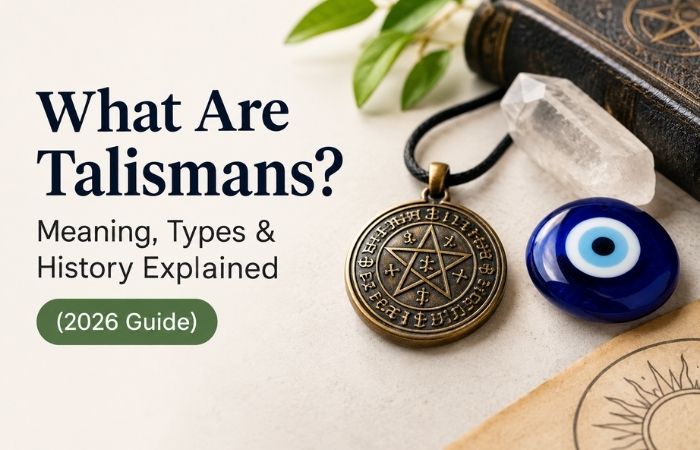
A talisman is an object believed to carry special power for the person who owns or wears it. Unlike a simple decoration, a talisman is thought to actively bring something into a person's life, whether that is protection, luck, love, or success. People have carried talismans for thousands of years, and the idea still shows up today in jewelry, keychains, and small keepsakes people keep close.
The word itself comes from the Arabic tilsam, which traces back to the Greek telesma, meaning the completion of a religious rite. That origin hints at something important. A talisman was never just a random trinket. It was usually created with intention, often through a ritual, a blessing, or a specific set of beliefs tied to its material and symbol.
Talisman vs Amulet: What Is the Difference?
Talismans and amulets get used interchangeably, but there is a subtle distinction worth knowing.
An amulet is generally protective. It is meant to guard the wearer against harm, illness, or negative energy. A talisman, on the other hand, is usually associated with actively attracting something positive, such as wealth, love, or good fortune. In practice, many objects do both jobs at once, which is why the two words often blur together in everyday use.
If you browse a collection of spiritual talismans, you will notice this overlap clearly. A single piece might be designed to draw prosperity while also shielding the wearer from bad luck, combining both functions into one meaningful item.
A Brief History of Talismans
The instinct to carry a meaningful object for protection is far older than most people assume. Archaeologists have found perforated animal teeth and carved bones used as personal charms dating back tens of thousands of years. Early humans attached meaning to natural materials long before any organized religion existed.
As civilizations developed, so did the craft behind talismans.
In ancient Egypt, scarab beetles were carved from stone and worn as symbols of rebirth and protection. In Mesopotamia, cylinder seals doubled as protective charms. Medieval Islamic tradition produced talismans inscribed with Quranic verses, geometric patterns, or astrological symbols, often intended to bring healing or success. In medieval Europe, alchemists combined specific metals with inscriptions, believing certain combinations could influence fate or health.
Meanwhile, East Asian traditions developed their own rich talisman culture. Taoist talismans, feng shui charms, and zodiac symbols have been passed down for centuries in China, often inscribed with characters believed to channel protective or fortunate energy. Tibetan Buddhist traditions contributed amulet boxes, mandala carvings, and deity pendants, many of which are still recreated in fine jewelry today.
Common Types of Talismans
Talismans generally fall into a few broad categories based on their intended purpose.
Protection talismans are meant to guard against negative energy, illness, or misfortune. Symbols like the evil eye, protective knots, or engraved animal figures fall into this group.
Wealth and prosperity talismans are created to attract abundance. Coins, certain animal figures, and specific gemstones are common choices across many cultures.
Love and relationship talismans are worn to nurture connection, loyalty, or emotional harmony between people.
Strength and courage talismans are meant to give the wearer confidence or resilience during difficult periods of life.
Peace and calm talismans are associated with inner balance and are often linked to specific stones or symbols tied to stillness and clarity.
These categories are not strict rules. Many talismans blend several intentions into a single design, which is part of why people find them so personal.
What Materials Are Talismans Made From?
Talismans can be made from almost anything, but certain materials recur across cultures because of the meanings attached to them.
Metals like gold, silver, and brass are common choices, valued both for their durability and their symbolic associations with wealth or spiritual clarity. Gemstones and crystals carry their own layer of meaning, with different stones tied to different intentions, such as obsidian for grounding or citrine for abundance. Written talismans, inscribed with prayers, symbols, or sacred text, have also existed for centuries, particularly within Islamic and East Asian traditions.
In modern jewelry, these traditional materials are often reinterpreted through fine craftsmanship. For example, our spiritual amulets at Aurkin Atelier combine sterling silver and brass with symbols drawn from Taoist and Tibetan heritage, giving old traditions a wearable, modern form.
How Are Talismans Believed to Work?
The belief behind a talisman usually rests on the idea that intention and symbolism can be transferred into a physical object. In many traditions, this happens through a ritual, a blessing, or a specific process of creation that is meant to activate the item.
This does not mean the object itself contains literal power in a scientific sense. Instead, the talisman acts as a focal point. Wearing or carrying it reminds the person of their intention, whether that is courage before a big decision or calm during a stressful season. Psychologists sometimes describe this as a placebo-like effect, but for the person wearing it, the meaning is often just as real as the object itself.
How to Choose a Talisman
There is no single correct way to select a talisman, but a few questions can help narrow things down.
Start by identifying what you want more of in your life right now. Is it protection, confidence, calm, or opportunity? From there, consider whether a particular culture or symbol already resonates with you personally, whether through family heritage, spiritual practice, or simple attraction to a design.
Material matters too. Some people are drawn to the weight and permanence of metal, while others prefer the natural energy associated with crystals and stones. Ultimately, the strongest talismans tend to be the ones that feel personally meaningful, not just traditionally powerful.
Modern Talismans and Personalized Jewelry
Talismans have not disappeared with modern life. If anything, interest in meaningful, symbol-rich jewelry has grown, especially among people looking for something with more depth than mass-produced accessories.
This is where custom craftsmanship comes in. At Aurkin Atelier, we create personalized talismans and amulets rooted in Chinese, Taoist, and Tibetan traditions, engraved and shaped to reflect the wearer's own intention. If you are curious how one specific symbol has been reinterpreted this way, our piece on the Hulu gourd talisman walks through its meaning and craftsmanship in more detail.
Frequently Asked Questions
Are talismans religious objects?
Not necessarily. While many talismans originate from religious or spiritual traditions, plenty of people use them simply as personal symbols of hope or intention, without any specific belief system attached.
Can any object become a talisman?
Yes. While traditional talismans follow established symbols and materials, any object can take on talisman-like meaning if it carries significance for the person who owns it, such as an inherited ring or a meaningful gift.
Is a talisman the same as a lucky charm?
They are closely related. A lucky charm is essentially a casual, modern term for a talisman focused specifically on luck, without the deeper ritual background some traditional talismans carry.
Do talismans need to be blessed to work?
In many traditions, yes, a blessing or ritual is considered part of what activates the object. For others, the meaning comes simply from the intention and belief of the wearer.
Talismans have carried human hope, fear, and intention across thousands of years and countless cultures. Whether rooted in ancient ritual or chosen simply because a symbol feels personally meaningful, they remain one of the oldest and most human ways of carrying our intentions with us.


